Showing posts with label North Carolina Slavery. Show all posts

Wednesday, October 19, 2011

North Carolina Sterilization Program Sponsor Wickliffe Draper

From Journal Now, Against their Will: North Carolina's Sterilization Program, "Benefactor With a Racist Bent: Wealthy recluse apparently liked the looks and potential of Bowman Gray's new medical-genetics department," by Kevin Begos:


The official version of the story from Wake Forest University has long been that a "New York philanthropist with a deep interest in population genetics" made a $100,000 gift of stock to the fledgling Department of Medical Genetics in 1953 - the equivalent of more than $650,000 today.

The whole story is this: The philanthropist was Wickliffe Draper, a wealthy recluse with a record of paying for research that tried to "prove" that whites were superior to blacks. The Bowman Gray School of Medicine got the money, but as part of the deal one of the most controversial patrons of racist science got his identity hidden.


"There appears to be some association with Draper. We don't know what the total amount was. We don't know specifically what it was used for," Dr. William B. Applegate, the dean of Wake Forest University School of Medicine, said last week.

Scholars taking hard looks at Draper say that his visit to a Nazi eugenics conference, his bankrolling of the racist tract "White America" and support for sending black Americans back to Africa are part of a pattern - the money promoted the now-discredited eugenics movement and radical racial politics.

"Draper wished to use science as a way to stop the civil-rights movement," said William Tucker, a professor of psychology at Rutgers University and author of The Funding of Scientific Racism: Wickliffe Draper and the Pioneer Fund, published this year.


Applegate said he couldn't condone the school's acceptance of money from Draper, but didn't want to judge his predecessors.

"Clearly the Bowman Gray School of Medicine took a gift from a source in those days that we would not take from that source today, for ethical reasons," said Applegate, who is creating a faculty committee to investigate Draper's ties to the school. "It would be impossible to accept money from a source with those views at this school today. It's absolutely, totally unacceptable."


The official history of the school of medicine is The Miracle on Hawthorne Hill, by Dr. Manson Meads. It refers to an anonymous patron and a gift of $100,000 to be spread over 30 years to pay for the first professorship of medical genetics at the school.

Bowman Gray School of Medicine Amphitheater

It was 1949 when Draper met Dr. C. Nash Herndon of Bowman Gray. Little is known about their meetings, but Herndon was playing a major role in the expansion of the North Carolina eugenic sterilization program at the time.

Research by the Winston-Salem Journal shows that in 1951, Dr. C.C. Carpenter, the dean of the medical school, sent Herndon a memo about grants. The school policy was to assume responsibility if the other source terminated, Carpenter wrote, and "this would be true in your case in regard to payment of your salary through the Draper grant."


Paul Lombardo, the head of the University of Virginia's Center for Biomedical Ethics, said that before Draper gave money to Bowman Gray, a similar offer to another school had raised ethical questions and fallen through.

In 1948 Draper suggested a gift of $100,000 to officials at the Dight Institute at the University of Minnesota to begin a "human genetics project," but director Shelton Reed wrote in a letter that year that Dight probably wouldn't get the money.

"Colonel Draper has very definite ideas as to what the subject of human genetics encompasses," Reed wrote, adding that meant "improvement of the American people by shipping the Negro inhabitants back to Africa. My remark about Colonel Draper is not flattering, but I think you will agree it is generally correct."

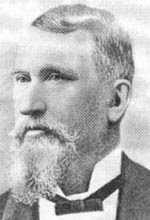
Wickliffe Preston Draper

Born in Massachusetts in 1891, Draper had old Kentucky blood on one side of the family, old Puritan on the other, and was sure that kind of family tree represented the true American. He inherited a multimillion-dollar textile fortune in the early 1920s and never worked at a job other than military service in World War I and World War II. A lifelong bachelor described as extremely reclusive by even his admirers, Draper lived in a huge New York apartment filled with stuffed big-game trophies he'd shot on trips to exotic parts of the world.

The $100,000 gift to Wake Forest was one of Draper's largest, Lombardo said, and an examination of what kind of science he was interested in raises questions about what he expected in return for his money.

In 1935 Draper attended the Nazi's International Congress for the Scientific Investigation of Population Problems in Berlin, Lombardo said. The Honorary Chairman of the meeting, Wilhelm Frick, was later convicted during the Nuremberg war-crimes tribunal and hanged in 1946.


Draper's companion at the conference, Dr. Clarence C. Campbell, gave a speech that resounded across the Atlantic. "The difference between the Jew and the Aryan is as unsurmountable (sic) as that between black and white," and closed with a rousing "To that great leader, Adolf Hitler!" Time magazine noted.

The next year Draper chose Campbell as a judge for an essay contest he funded, and in 1937 Draper and eugenicists Harry Laughlin and Frederick Osborn launched the Pioneer Fund as a vehicle for distributing grants. Tucker notes that a proposed Pioneer budget for 1937 mentions "two German films referred to by Colonel Draper have been received," and that one, The Hereditary Defective, was shown at 28 U.S. high schools through Laughlin's efforts. Draper continued to work with Laughlin to find ways to use his money to further science that focused on racial issues. Lombardo said there is conclusive evidence that Draper funded a special printing of Earnest Sevier Cox's racist tract "White America" that was sent to every member of Congress in 1937.


Tucker has shown that Draper gave $215,000 to the Mississippi Sovereignty Commission in the 1960s, a group that used the money for a failed effort to stop the passage of the 1964 Civil Rights Act.

In the late 1950s Kinston, N.C., native Harry Weyher became the president of the Pioneer Fund, a position he held until his death this year.

Through Weyher, Draper gave $500 to Wesley Critz George, a staunch advocate of segregation and a professor at the University of North Carolina, to help distribute a 1961 anti-integration pamphlet. Draper sent George $1,000 Christmas checks every year until 1972, Tucker notes.

Pioneer Fund ties to North Carolina expanded in later years, as Marion Parrott of Kinston and Tom Ellis, a Raleigh lawyer, served on Pioneer's board of directors. Ellis' Coalition for Freedom, a part of the Jesse Helms political machine, received $195,000 in Pioneer grants in the 1980s, the equivalent of more than $300,000 today. Ellis did not return calls seeking comment.

Pioneer Fund grants paid for much of the research that supported The Bell Curve, a 1994 best-seller that argued that blacks are genetically inclined to be less intelligent than whites.

J. Philippe Rushton, the current Pioneer president, said there's no doubt some of Draper's past is a public-relations embarrassment, but "that has absolutely nothing to do with the Pioneer Fund."


Because the Pioneer Fund doesn't take stands on political issues, Rushton said it makes no sense to apologize for Draper's past.

"We wouldn't condemn Draper's views on segregation or somebody else's views on integration," he said. Those who attack Draper and Pioneer downplay details that don't fit allegations of racism, Rushton said.

One of the original members of the Pioneer Board of Directors was John Marshall Harlan, who later became a Supreme Court justice and voted for the landmark 1954 Brown vs. Board of Education school-desegregation ruling.

Draper's critics reject those defenses. "(He) made a point of funding people who shared his views on race, and he also made a point of trying to hide what he did," Lombardo said.

Draper was extremely secretive, but even his scant correspondence suggests that he must have believed that Herndon shared his general views on race. Tucker quotes from a 1954 letter to Osborn:

"I should be reluctant to assist investigators whose personalities and view points were markedly alien to my own," Draper wrote, adding that he believed in "measures to promote considerable ethnic homogeneity...."
North Carolina Highway Historical Marker (Raleigh, NC) to commemorate the victims of the state's Eugenics Sterilization Program ( 1933) between 1929 and 1974, over 7,600 individuals were sterilized.

Rushton said he knew nothing about Draper's gift to Bowman Gray, or Herndon's role in the expanded eugenic sterilization program in North Carolina that would become dramatically more racist in the 1950s and 1960s.

"Maybe that's good or bad charity, depending on your values," he said of possible links between Draper's gift and sterilizations in North Carolina.


Applegate is just beginning to look into ties between the school, Draper and sterilizations in North Carolina, but he rejected the entire concept of eugenics.

"To me, the whole concept of involuntary sterilization sends a chill down my spine," Applegate said. "I just think that it's morally wrong. The very concept of that is profoundly upsetting to me and to the leadership and the faculty of the school."

Tuesday, September 20, 2011

North Carolina KKK Murder Senator John W. Stephens


The Caswell County courthouse in Yanceyville was the scene of a brutal Ku Klux Klan murder in 1870.

Raleigh, N. C., Feb. 25 — …Mr. Bowman, Republican… related from the sworn evidence of one of the parties present the particulars of the murder of Senator John W. Stephens, of Caswell, which occurred in June, 1870; and that warrants had been issued for the guilty parties. He stated that a public Democratic meeting was in progress in the court-house at Yanceyville, the county seat of Caswell; that Stephens was in attendance on that meeting; that a prominent Democrat of Caswell approached Stephens with a smile, and asked him to go down-stairs with him.

Senator John W. Stephens
Stephens assented, and they went into a room formerly occupied by the Clerk of the Court of Equity; that as soon as they entered the room the door was locked; that there were in the room eight white men and one negro. Stephens was surprised to find the room full of men, and was struck with horror when a rope, fixed as a lasso, was thrown over his neck from behind, and he was told by the spokesman of the Kuklux crowd that he must renounce his Republican principles;
kkk

That he believed they were right, and that the Republic would prosper if they were carried out; that he could not leave the country and State, because his all was there; that the colored people looked upon him as a leader, that they depended on him, and that he could not desert them. Stephens was then told that he must die. He then asked to be allowed to take a last look from the window of the office, at his home and any of his family that might be in view.

The request was granted, and when Stephens stepped to the window he beheld his little home and his two little children playing in front of his house. He was then thrown down on a table, two of the Kuklux holding his arms. The rope was ordered to be drawn tighter, and the negro was ordered to get a bucket to catch the blood. This done, one of the crowd severed the jugular vein, the negro caught the blood in the bucket, and Stephens was dead.
woodpile
His body was laid on a pile of wood in the room, and the murderers went up-stairs, took part in the meeting, and stamped and applauded Democratic speeches.
John W. Stephens Pistol (1870) The Richmond-Miles History Museum in Yanceyville, Caswell County, North Carolina, is this "Pocket" Colt pistol that was taken from Senator John W. Stephens (1834-1870) before he was murdered by the Ku Klux Klan in the Caswell County Courthouse May 21, 1870. The weapon is owned by Earl J. Smith, Jr., who inherited it from his father.
John Walter “Chicken” Stephens was a Republican state senator and justice of the peace from Caswell County. Stephens worked to encourage blacks to vote for the Republican Party, which infuriated many of his white neighbors, who considered him a scalawag — a traitor to the South.

On Sunday morning, May 22, 1870, Stephens was found in a storeroom of the county courthouse, brutally murdered. It was assumed that the Klan had been responsible for the murder, and several Klansmen were arrested by state militia, questioned, and then released.
Amnesty for the Klan

In 1871, Democrats again controlled the General Assembly, and they impeached Governor Holden and removed him from office. In 1872 and 1873 they passed amnesty laws that pardoned anyone who had committed any violation of state law, excepting only rape, in his duties as a member of a secret political organization such as the Ku Klux Klan. Some men who had been convicted of crimes were released, and Stephens’ murderers were never brought to justice.
The article on this page was printed in the New York Times after the State Senate passed an amnesty bill in 1873. The article reminded readers of the brutal nature of Stephens’ murder, and asked, “Shall his assassins be amnestied?”

Ku Klux Klan Captain John Lea's confession

One of the men arrested after Stephens’ murder, former Confederate Captain John Lea, was asked repeatedly in later years about his involvement. He supposedly answered each time, “You all can wait until I die.” In 1919, Lea gave three state officials a statement about the murder, insisting that they pledge not to open the statement until Lea died.

When Lea finally died in 1935, the statement was made public. In it Lea had written that “Stephens had been tried for arson, and extortion, found guilty and sentenced to death by the KKK.” Lea described the murder, named the twelve men responsible, and concluded that “Stephens had a fair trial before the jury of twelve men.” Lea, like many members of the Ku Klux Klan, considered the Klan to be the rightful government of North Carolina during Republican rule in Reconstruction. And Lea, certainly, never regretted his actions.

North Carolina: “Kirk-Holden War”

On June 6, 1870, Governor William Woods Holden, a Republican from Wake County, issued a five-hundred-dollar reward for the arrest or information leading to the capture of individuals involved in the deaths of John W. “Chicken” Stephens, Wyatt Outlaw, and several other North Carolinians. The proclamation, which also detailed various other acts of violence against African Americans and white Republicans, attributed the crimes to the Ku Klux Klan and was one of the many events leading to the “Kirk-Holden War.”


Following its formation in the aftermath of the Civil War, the Klan quickly spread across the South. In North Carolina, the Klan was not a monolithic organization; rather, it was a loose conglomeration of secret societies, which used terror and vigilante tactics in an attempt to reverse Republican electoral success and maintain white supremacy. While Klan activity occurred throughout North Carolina, it was particularly active in the Piedmont counties of Alamance and Caswell. Governor Holden attempted to use local authorities to control the violence, but in many cases county and community leaders were members of the Klan or sympathetic to its activities.

As events began to spiral out of control, the North Carolina General Assembly passed the “Shoffner Act,” introduced by Alamance County Republican senator T. M. Shoffner. The law enabled the governor to declare a county “to be in a state of insurrection, and to call into active service the militia of the state to such an extent as may become necessary to suppress such insurrection” if the local officials were incapable — or unwilling — to do so. Holden declared martial law in Alamance County on March 7, 1870, and in Caswell County on July 8.


Holden selected former Union colonel and cavalry leader George W. Kirk, who was born and raised in Greene County, Tennessee, to lead the state militia troops. Kirk’s infamy and reputation as a Union “bushwhacker,” whose Federal units terrorized Southern mountain communities, resonated deeply throughout the state. The newly constituted force of state militia, predominately consisting of men from eastern Tennessee and western North Carolina, arrived in Alamance and Caswell Counties in July and arrested over 100 individuals, mostly without incident. The prisoners were jailed in Caswell County, while awaiting trial before a special military court. Holden and Kirk ignored writs of habeas corpus that were issued by a state judge, and the defendants and their supporters turned to the federal judiciary for assistance. Support for the governor’s controversial measures faltered, and President Ulysses S. Grant warned Holden that the national government would no longer support his actions. The suspected Klan leaders and members were released in late August, and, in November, Alamance and Caswell Counties were declared to no longer be in a state of insurrection.


The events of the “Kirk-Holden War,” as it came to be called by those opposed to Governor Holden’s actions, and the subsequent electoral collapse of the state Republican Party in 1870 were substantial factors in the December 1870 impeachment and March 1871 conviction of Holden.

Governor Holden speaks out against the Ku Klux Klan

Holden tried to stamp out the Klan. In this address to the General Assembly, Holden asked representatives to give him more power so that he could end the violence that swept through parts of North Carolina. In response, the legislature passed the Shoffner Act, giving Holden the power to use the militia to keep order.

Executive Department, Raleigh,
December 16, 1869.

To the Honorable, the General Assembly of North Carolina.

Gentlemen: — Allow me respectfully and earnestly to call your attention to the necessity which exists for such amendments to the militia law as will enable the executive to suppress violence and disorder in certain localities of this State, and to protect the persons of citizens, their lives and their property.

Since my last annual message, dated Nov. 16th, 1869, numerous outrages of the most flagrant character have been committed upon peaceable and law-abiding citizens, by persons masked and armed, who rode at night, and who have thus far escaped the civil law. I have adopted such measures as were in my power to ferret out and bring to justice all breakers of the law, without reference to their color or to the political party or parties to which they belong, and I am satisfied that Judge and solicitors in the various circuits have been prompt, energetic and impartial in the discharge of their duties. Notwithstanding this, Gentlemen, the outrages referred to seem to be rather on the increase in certain localities in so much that many good citizens are in a constant state of terror and society in said localities is in a deplorable condition. It is for your honorable body to apply the remedy by so strengthening the arm of the executive as to enable him to repress these outrages and restore peace and order. I have confidence in your wisdom, in your regard for law, and in the disposition which I feel sure exists in every member of your honorable body to adopt such measures as will speedily put an end to the evils complained of.
I have the honor to be, Gentlemen, with great respect,

Your obedient servant,
W. W. Holden, Governor.

Judge Albion Tourgee on the KKK

Ku Klux Klan costumes in North Carolina, 1870. (Engraving made from an 1870 photograph by U.S. Marshal J. G. Hester

The following letter was published in the New York Tribune in 1870. In it Judge Albion Tourgee of North Carolina, a carpetbagger, describes the outrages of the Ku Klux Klan to an acquaintance in the U.S. Senate.


Greensboro, May 24,1870.

My Dear General,

It is my mournful duty to inform you that our friend John W. Stephens, State Senator from Caswell, is dead. He was foully murdered by the Ku-Klux in the Grand Jury room of the Court House on Saturday or Saturday night last. The circumstances attending his murder have not yet fully come to light there. So far as I can learn, I judge these to have been the circumstances: He was one of the Justices of the Peace in that township, and was accustomed to hold court in that room on Saturdays. It is evident that he was set upon by some one while holding this court, or immediately after its close, and disabled by a sudden attack, otherwise there would have been a very sharp resistance, as he was a man, and always went armed to the teeth. He was stabbed five or six times, and then hanged on a hook in the Grand Jury room, where he was found on Sunday morning. Another brave, honest Republican citizen has met his fate at the hands of these fiends. Warned of his danger, and fully cognizant of the terrible risk which surrounded him, he still manfully refused to quit the field. Against the advice of his friends, against the entreaties of his family, he constantly refused to leave those who had stood by him in the day of his disgrace and peril. He was accustomed to say that 3,000 poor, ignorant, colored Republican voters in that county had stood by him and elected him, at the risk of persecution and starvation, and that he had no idea of abandoning them to the Ku-Klux. He was determined to stay with them, and either put an end to these outrages, or die with the other victims of Rebel hate and national apathy: Nearly six months ago I declared my belief that before the election in August next the Ku-Klux would have killed more men in the State than there would be members to be elected to the Legislature. A good beginning has been made toward the fulfillment of this prophecy.
Judge Albion Tourgee on the KKK

The following counties have already filled, or nearly so, their respective "quotas:" Jones County, quota full, excess 1; Orange County quota full; excess, 1. Caswell County quota full; excess, 2; Alamance County quota full; excess, 1. Chatham County quota nearly full. Or, to state the matter differently, there have been twelve murders in five counties of the district during the past eighteen months, by bands of disguised villains. In addition to this, from the best information I can derive, I am of the opinion that in this district alone there have been 1,000 outrages of a less serious nature perpetrated by the same masked fiends. Of course this estimate is not made from any absolute record, nor is it possible to ascertain with accuracy the entire number of beatings and other outrages which have been perpetrated. The uselessness, the utter futility of complaint from the lack of ability in the laws to punish is fully known to all. The danger of making such complaint is also well understood. It is therefore not unfrequently by accident that the outrage is found out, and unquestionably it is frequently absolutely concealed. Thus, a respectable, hard working white carpenter was working for a neighbor, when accidentally his shirt was torn, and disclosed his back scarred and beaten. The poor fellow begged for the sake of his wife and children that nothing might be said about it, as the Ku-Klux had threatened to kill him if he disclosed how he had been outraged. Hundreds of cases have come to my notice and that of my solicitor....
Ku Klux Klan Mode of Torture, circa 1870

Men and women come scarred, mangled, and bruised, and say: "The Ku-Klux came to my house last night and beat me almost to death, and my old woman right smart, and shot into the house, 'bust' the door down, and told me they would kill me if I made complaint;" and the bloody mangled forms attest the truth of their declarations. On being asked if any one knew any of the party it will be ascertained that there was no recognition, or only the most uncertain and doubtful one. In such cases as these nothing can be done by the court. We have not been accustomed to enter them on record. A man of the best standing in Chatham told me that he could count up 200 and upward in that county. In Alamance County, a citizen in conversation one evening enumerated upward of 50 cases which had occurred within his own knowledge, and in one section of the county. He gave it as his opinion that there had been 200 cases in that county. I have no idea that he exceeded the proper estimate. That was six months ago, and I am satisfied that another hundred would not cover the work done in that time.


These crimes have been of every character imaginable. Perhaps the most usual has been the dragging of men and women from their beds, and beating their naked bodies with hickory switches, or as witnesses in an examination the other day said, sticks" between a "switch" and a "club." From 50 to 100 blows is the usual allowance, sometimes 200 and 300 blows are administered. Occasionally an instrument of torture is owned. Thus in one case two women, one 74 years old, were taken out, stripped naked, and beaten with a paddle, with several holes bored through it. The paddle was about 30 inches long, 3 or 4 inches wide, and 1/4 of an inch thick, of Oak. Their bodies were so bruised and beaten that they were sickening to behold. They were white women and of good character until the younger was seduced, and swore her child to its father. Previous to that and so far as others were concerned her character was good.

Again, there is sometimes a fiendish malignity and cunning displayed in the form and character of the outrages. For instance, a colored man was placed astride of a log, and an iron staple driven through his person into the log. In another case, after a band of them had in turn violated a young negro girl, she was forced into bed with a colored man, their bodies were bound together face to face, and the fire from the hearth piled upon them. The K.K.K. rode off and left them, with shouts of laughter. Of course the bed was soon in flames, and somehow they managed to crawl out, though terribly burned and scarred. The house was burned.


I could give other incidents of cruelty, such as hanging up a boy of nine years old until he was nearly dead, to make him tell where his father was hidden, and beating an old negress of 103 years old with garden partings because she would not own that she was afraid of the Ku-Klux. But it is unnecessary to go into further detail. In this district I estimate their offenses as follows, in the past ten months: Twelve murders, 9 rapes, 11 arsons, 7 mutilations, ascertained and most of them on record. In some no identification could be made.


Four thousand or 5,000 houses have been broken open, and property or persons taken out. In all cases all arms are taken and destroyed. Seven hundred or 800 persons have been beaten or otherwise maltreated. These of course are partly persons living in the houses which were broken into.

And yet the Government sleeps. The poor disarmed nurses of the Republican party-those men by whose ballots the Republican party holds power-who took their lives in their hands when they cast their ballots for U.S. Grant and other officials-all of us who happen to be beyond the pale of the Governmental regard-must be sacrificed, murdered, scourged, mangled, because some contemptible party scheme might be foiled by doing us justice. I could stand it very well to fight for Uncle Sam, and was never known to refuse an invitation on such an occasion; but this lying down, tied hand and foot with the shackles of the law, to be killed by the very dregs of the rebellion, the scum of the earth, and not allowed either the consolation of fighting or the satisfaction that our "fall" will be noted by the Government, and protection given to others thereby, is somewhat too hard. I am ashamed of the nation that will let its citizens be slain by scores, and scourged by thousands, and offer no remedy or protection. I am ashamed of a State which has not sufficient strength to protect its own officers in the discharge of their duties, nor guarantee the safety of any man's domicile throughout its length and breadth. I am ashamed of a party which, with the reins of power in its hands, has not nerve or decision enough to arm its own adherents, or to protect them from assassinations at the hands of their opponents. A General who in time of war would permit 2,000 or 3,000 of his men to be bushwhacked and destroyed by private treachery even in an enemy's country without any one being punished for it would be worthy of universal execration, and would get it, too. How much more worthy of detestation is a Government which in time of peace will permit such wholesale slaughter of its citizens? It is simple cowardice, inertness, and wholesale demoralization. The wholesale slaughter of the war has dulled our Nation's sense of horror at the shedding of blood, and the habit of regarding the South as simply a laboratory, where every demagogue may carry on his reconstructionary experiments at will, and not as an integral party of the Nation itself, has led our our Government to shut its eyes to the atrocities of these times. Unless these evils are speedily remedied, I tell you, General, the Republican party has signed its death warrant. It is a party of cowards or idiots-I don't care which alternative is chosen. The remedy is in our hands, and we are afraid or too dull to bestir ourselves and use it.

But you will tell me that Congress is ready and wilting to act if it only knew what to do. Like the old Irish woman it wrings its hands and cries, "O Lawk, 0 Lawk; if I only knew which way." And yet this same Congress has the control of the militia and can organize its own force in every county in the United States, and arm more or less of it. This same Congress has the undoubted right to guarantee and provide a republican government, and protect every citizen in "life, liberty, and the pursuit of happiness," as well as the power conferred by the XVth Amendment. And yet we suffer and die in peace and murderers walk abroad with the blood yet fresh upon their garments, unharmed, unquestioned and unchecked. Fifty thousand dollars given to good detectives would secure, if well used, a complete knowledge of all this gigantic organization of murderers. In connection with an organized and armed militia, it would result in the apprehension of any number of these Thugs en masque and with blood on their hands. What then is the remedy?

First: Let Congress give to the U. S. Courts, or to Courts of the States under its own laws, cognizance of this class of crimes, as crimes against the nation, and let it provide that this legislation be enforced. Why not, for instance, make going armed and masked or disguised, or masked or disguised in the night time, an act of insurrection or sedition?

Second: Organize militia, National-State militia is a nuisance-and arm as many as may be necessary in each county to enforce its laws.

Third: Put detectives at work to get hold of this whole organization. Its ultimate aim is unquestionably to revolutionize the Government. If we have not pluck enough for this, why then let us just offer our throats to the knife, emasculate ourselves, and be a nation of self-subjugated slaves at once.
The press photo was taken in Durham, North Carolina. It was dated April 24, 1965. The caption read, "A young negro boy smiles tolerantly at hooded ku klux klansmen as they staged a "mrch" in downtown Durham Saturday afternoon, preliminary to a mass rally tonight.
And now, Abbott, I have but one thing to say to you. I have very little doubt that I shall be one of the next victims. My steps have been dogged for months, and only a good opportunity has been wanting to secure to me the fate which Stephens has just met, and I speak earnestly upon this matter. I feel that I have a right to do so, and a right to be heard as well, and with this conviction I say to you plainly that any member of Congress who, especially if from the South, does not support, advocate, and urge immediate, active, and thorough measures to put an end to these outrages, and make citizenship a privilege, is a coward, a traitor, or a fool. The time for action has come, and the man who has now only speeches to make over some Constitutional scarecrow, deserves to be damned.
(http://www.academicamerican.com/recongildedage/documents/KKK.htm)

Albion Tourgee


Albion Tourgee

The News & Record article, "The Sit-Ins: a pioneer for rights," by Frank Woods, on 31 January 2010: After much hesitation and anticipation, the International Civil Rights Center & Museum will soon open its doors. A broad spotlight will be cast on Greensboro in recognition of its activist spirit in the quest for equality, one that reaches deep into the past and beyond the transformative day of Feb. 1, 1960.

The city’s history is, in fact, steeped with courageous individuals who have lobbied intensely for positive change in the midst of racial injustice and, sometimes, sacrificed body and soul to secure for all the precious guarantees found in the 14th and 15th amendments of the U.S. Constitution.

Across the street from the museum, is an informational marker that honors a former resident of Greensboro who made it his primary mission to secure basic rights of freedom for newly emancipated slaves and to see that when the new state constitution was framed, it was favorable to black advancement.

The same man is also honored by a historical marker on Lee Street near the ramp leading up to Martin Luther King Jr. Drive, citing the location where his home once stood. Obviously, he left a mark on the city but the city hardly knows of him today. His name was Albion Winegar Tourgee, the most “infamous” carpetbagger to set foot in North Carolina.


Born in Williamsfield, Ohio, in 1838, Tourgee grew up in Kingsfield, Ohio, an area of strong abolitionist sentiment. He later joined the Union army at the outbreak of the Civil War and sustained a severe wound to his spine. After the war, Tourgee’s injury left him in poor health. In an attempt to recoup his strength, he decided to try the warmer climate of the South, and Greensboro was his destination.

Tourgee’s early years in the city during Reconstruction were filled with righteous outrage as he continually witnessed the mistreatment of “freedmen.” He soon drifted into a personal crusade for social justice and became increasingly vocal on behalf of African American rights. This, in turn, caused him to be vilified and ostracized by whites in the state who wished to see the old social and political order preserved.

Tourgee took an active part in the N.C. State Constitutional Convention held in Raleigh in 1868, and served as one of the chief framers on the new constitution. He pushed for a progressive document that called for the inclusion of blacks in the creation of a “New South.” For his efforts, Tourgee was branded a derisive figure in North Carolina politics and a “contemptible friend of the Negro.”
Wearing that label like a badge of honor, Tourgee continued to be an outspoken champion of African American rights and liberties. He was elected a judge of the Superior Court, Seventh Judicial District of North Carolina — a position that gave him the authority to enforce his ideals throughout the Piedmont. Judge Tourgee continued to lobby against those who opposed African American progress, even though his life was threatened by the newly formed Ku Klux Klan.

Undaunted, Tourgee attacked that organization with a scathing expose titled “The Invisible Empire.” This material was later incorporated into a best-selling novel, “A Fool’s Errand” (1879).

Tourgee left the state in the waning years of Reconstruction as the “Old South” was being redeemed.

Living outside of the South did not dampen Tourgee’s efforts at racial redemption. He continued to write and speak on matters of race.

More importantly, he founded a national civil rights group in 1891, the National Citizens’ Rights Association, to deal with mounting racial injustices throughout the country caused by restrictive “Jim Crow” laws and lynchings.

But Tourgee’s greatest battle against the forces of oppression came in a showdown before the Supreme Court in 1896 as the chief counsel for Homer Plessy in his case against the Louisiana railroad company that forced him into a segregated car (Plessy v. Ferguson). Unfortunately, Tourgee’s eloquence and fervor were not enough to sway a majority of the high court justices and the floodgates of discrimination were thrown open in America. Now that he was a beaten man, Tourgee’s activism shortly ground to a halt.

As local, state and national officials, along with the curious public, descend on the new civil rights museum, many will walk the same street that Tourgee trod long ago. In a way, they will follow in his footsteps to a “sacred place” in the struggle for equal rights. Had Judge Tourgee been alive on Feb. 1, 1960, there is little doubt that he would have been at the Woolworth building, lending his support to the Greensboro Four as they accelerated the cause he championed. (source: Frank Woods, an African American studies professor at UNCG; North Carolina News & Record)

Friday, September 2, 2011

Beautiful Wilmington, North Carolina Landmarks Built With Slave Labor

Thalian Hall Wilmington, NC


The Star News article"Civil War Anniversary - Traces of slavery still found in Wilmington," by Ben Steelman on 31 August 2011: When North Carolina seceded from the Union in 1861, nearly half of Wilmington's residents weren't consulted on the issue.


Out of a population of 9,552 in the 1860 federal census, 3,777 of those living in Wilmington were slaves. Another 573 were listed as "free persons of color," but African Americans were not allowed to vote in antebellum North Carolina, nor could they hold office.


And how did those slaves live?


Thalian Hall/City Hall, Wilmington, North Carolina


"Well, we can guess they worked long hours," said Gareth Evans, executive director of the Bellamy Mansion Museum at Fifth Avenue and Market Street. "There was lots of scrubbing, lots of emptying chamber pots, lots of toting water."


A century and a half after the Civil War, traces of the legacy of slavery can still be found in Wilmington.
Thalian Hall Wilmington, NC


Many of those traces can be found in some of its most impressive public buildings, such as the Thalian Hall/City Hall complex or the Bellamy Mansion itself.


Both of these structures were largely built by slave and free black labor by skilled craftsmen such as William B. Gould, a plasterer, or Abraham H. Galloway, a bricklayer who pocketed his own wages and paid his owner, Brunswick County planter Thomas Hankins, $15 per month.


Thalian Hall Wilmington, NC


"I remember the bricklayers, they was all colored," a former Wilmington slave recalled in a Depression-era interview for the federal Works Progress Administration and later compiled in George P. Rawick's "American Slave."


"The man that plastered the City Hall was named George Price, he plastered it inside. The men that plastered the City Hall outside, and put those columns up in front, their names was Robert Finey and William Finey, they both was colored. …


Thalian Hall/City Hall


"Yes'm they was slaves, mos' all the fine work 'round Wilmington was done by slaves. They called 'em artisans. None of 'em could read, but give them any plans, and they could follow them to the las' line."


Over at the Bellamy Mansion, now cased in glass, is palpable proof of the contributions. Some years ago, repairs revealed a piece of plaster with the florid signature of William B. Gould, the man who did the work.


Born in 1837, the son of an English father and a slave mother, Gould was a slave belonging to Nicholas Nixon, who owned a large plantation in what is now Porters Neck.


Bellamy Mansion Museum at Fifth Avenue and Market Street


Like many of the Wilmington slaves, however, Gould enjoyed considerably more liberty than slaves who were working on the rice plantations along the Cape Fear River or one of the "turpentine orchards" of the pine forests nearby.


Slaves in the building trades could, in effect, rent themselves out, usually in contracts that ran from the first of the year to the last. They gave their owners a share of what contractors paid them and kept the rest.


In some cases, if a slave was hardworking and lucky enough, he could save enough money to buy his own freedom and that of his family – if his owner would take the payment.


Rear View of the Bellamy Mansion, Wilmington, North Carolina


Still, life was not idyllic, even for these workmen. Slaves were closely scrutinized by the local law. Each night, a bell in the old Market House at the foot of Market Street tolled, signaling the curfew for the slaves.


In 1857, the 20-year-old bricklayer Abraham H. Galloway smuggled himself aboard a ship and sailed to freedom in the North. He could not make his payments to his master, Hankins, and apparently feared he would be shipped off to tougher work or sold to a meaner master, according to his biographer, historian David Cecelski.


Born in 1837 in Smithville (now Southport), Galloway, like Gould, had been the son of a white man, a Brunswick planter's son, and a slave woman. Wilmington would hear from him again.


Bellamy Mansion


In 1862, in the midst of the Civil War, Gould would escape as well. On the night of Sept. 21, he and seven other slaves slipped down to the riverfront, stole a small boat and began to row down the Cape Fear.


On a voyage that took a couple of days, hiding in the swamps by day, the eight slaves made their way down the Cape Fear River and out to sea, where they reached the Navy vessel USS Cambridge, which was part of the blockade of Wilmington.


Gould promptly enlisted in the U.S. Navy, serving for the rest of the war. He kept a journal of his wartime service, later published as "Diary of a Contraband" in 2002 by Stanford University Press. ("Contraband" was a Civil War term for an escaped slave.)


Urban Slave Quarters At The Bellamy Mansion In Wilmington, North Carolina


North Carolina forbade the teaching of slaves to read and write, but the law was widely ignored. Gould probably learned his letters in Sunday school at St. John's Episcopal Church, which he attended, said his great-grandson, William B. Gould IV, who edited the journals.


Not all Wilmington slaves, of course, were builders. At the Bellamy Mansion, Dr. John D. Bellamy and his family kept nine slaves: seven women, who worked as cooks and maids, and two men, Guy the butler and Tony the coachman who doubled as a handyman, according to Evans.


The women lived in a two-story brick dormitory building behind the house, apparently joined from time to time by the slaves of guests. (The slave quarters had a total of 10 privies, Evans noted.) Guy and Tony lived above the Bellamy stable, which is now the museum's visitors' center.

Slave Quarters Interior


The Spartan slave quarters are currently being restored with funding from a federal grant. Evans hopes the project can be completed by the end of the year.


Gould was not the only slave to leave a written account. James Johnson, born in 1847 in Smithville (Southport), was sold to a succession of Brunswick county boat builders and planters. He worked as a hostler (i.e., a stable groom), a field hand and as a coachman.


In a 15-page narrative, he recalled going out on Sundays "into the fields (to) scare the birds from the Indian corn and rice."


Life was tougher on the plantations. Johnson vividly recalled how his master tied him to a tree trunk and "flogged me until the blood streamed down my back, and then ordered some of the other Negroes to wash me in salt and water in order to cure my lacerated back as soon as possible."
Plantation Slave Quarters


As the Civil War broke out, Johnson noted that food grew more scarce. In the summer of 1862, like Gould, Johnson and some of his friends stole a boat and made their way to the Union blockader USS Stars and Stripes.


He made his way to England, working as a sailor and a boxer until he underwent a religious conversion. Later he traveled as an evangelist, leaving a written account of his life that Cecelski and Alex Meekins discovered in archives in Oldham, England.


After the war, Gould moved to Massachusetts, where he prospered as a building contractor and became active in the Grand Army of the Republic, a Union veterans' organization. He died in 1923, having seen all six of his sons serve in the armed forces in the Spanish-American War or World War I.


Bellamy Mansion Negro House c. 1859


Galloway's life was perhaps the most amazing. During the Civil War, he returned to North Carolina. Based in Union-occupied New Bern, he served as a Union spy and as a sometime recruiter of ex-slaves for the Union Army. After the war, he returned to Wilmington, where he became active in the Republican Party. He represented New Hanover County in the state's 1868 constitutional convention, then served in the state Senate until his death in 1870. Cecelski is currently writing a full-length biography of Galloway for the University of North Carolina Press, due for publication in 2012. (source: Star News, Ben Steelman, 31 Aug. 2011)